

Key takeaways
- Leaders arrive at AI with the same first question, am I early or late, and the answer from the room was that nobody is ahead.
- AI adoption works best when it starts from a business problem the organisation already feels, rather than from the technology.
- Employees in most organisations are already using AI tools, which makes governance and security a present concern rather than a future one.
- Adoption succeeds or fails on people and habits far more often than on the capability of the technology.
- One strong use-case, proved properly, builds more confidence than an organisation-wide transformation programme.
Last week we held the first ramsac AI Summit in London. The programme was built around four questions business leaders keep asking. Where do we start? Where does the value actually come from? How do people adopt a new way of working? And how do we trust AI with data that matters?
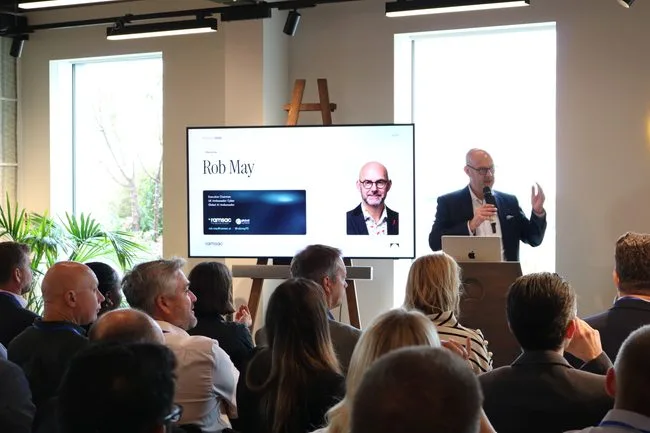
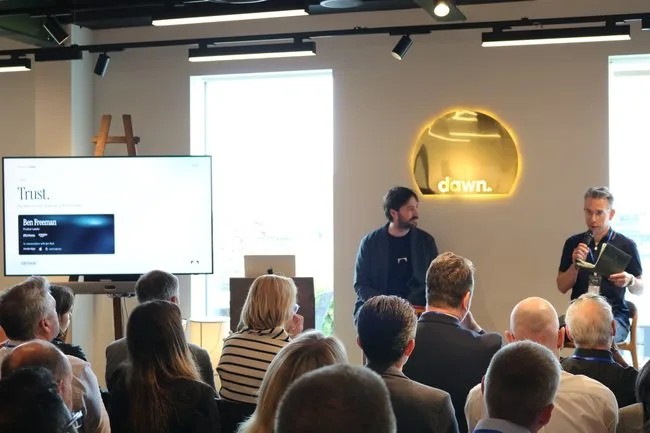
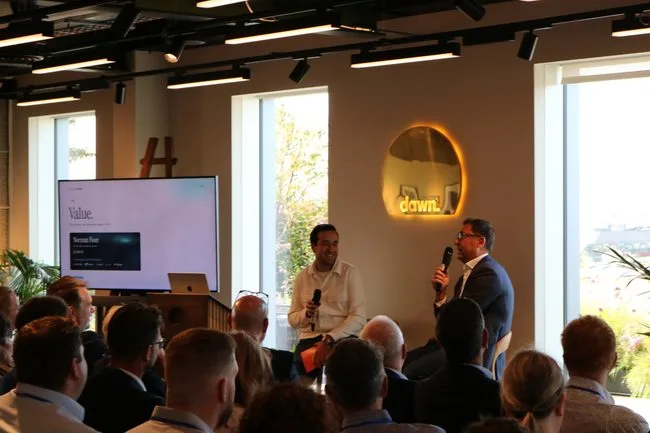
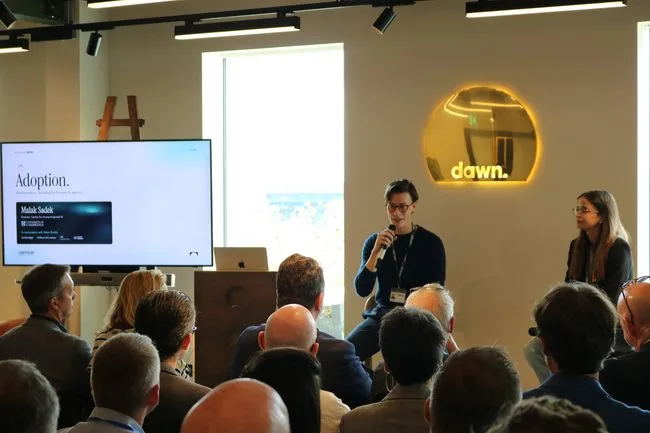
The day brought together speakers and perspectives from across business, technology, academia and investment. Rob May from ramsac opened and closed the programme. Norman Fiore of Dawn Capital spoke with Nils Howland of Ironbridge. Malak Sadek of the University of Cambridge joined Owen Brooks of Ironbridge. Ben Freeman, formerly of Meta, was in conversation with Jan Bzik of Ironbridge.
We heard the same picture in every session. Interest is high, confidence is low, and the distance between the two is where most organisations are currently stuck.
The question underneath every other question
Rob May opened with a session called Four reasons not to adopt AI, which is a deliberately awkward way to start an AI summit. The argument was that the objections businesses raise are more honest, and more interesting, than most of the arguments made in favour, so they deserve to be taken seriously one at a time.
Before the objections came the question leaders ask constantly, usually in private: am I early, or am I late? The answer was that nobody is ahead. Across organisations of every size, none considers the job finished.
That reframes the anxiety usefully. The race most people think they are losing, which model is smartest, has stopped being the race that matters, because the gap between the best model and a good enough one has narrowed for most everyday business work. A different gap is opening instead, between organisations building working habits with AI now, imperfectly, and those still waiting for a cleaner moment to begin. Rob has since written up both of his sessions, Four Reasons Not to Adopt AI and Four Reasons to Adopt AI, and they are worth reading alongside this.
Adoption should start with a problem, not the technology
A theme that ran through the whole programme was that the strongest AI projects begin with something that was already a problem.
Rob’s term for this is the flagship use-case: the one part of the business where, if AI took the administrative weight off a single team for six months, you would genuinely feel it. Not the most ambitious idea on the roadmap, and not the one that shows the technology off best. The one whose absence is already being felt by people who do the work.
That matters because the alternative is familiar and rarely ends well. Technology in search of a problem produces pilots that impress in a demonstration and then quietly stall, because nobody in the business was waiting for them. Starting from a real problem also gives you something honest to measure against later.
Your people have probably started without you
One of the more uncomfortable observations of the morning was that AI adoption has usually already happened inside an organisation, just not through a policy. Someone in finance has pasted a contract into a chatbot to summarise it. Someone in marketing is drafting with Copilot. No board approved any of it.
That changes what leadership is actually deciding. The question is not whether to adopt AI. It is whether to find out what is already happening and put sensible boundaries around it before something goes wrong.
The session on trust, with Ben Freeman, formerly of Meta, in conversation with Jan Bzik of Ironbridge, took this into the territory organisations find hardest: data, security, governance, and the knowledge that sits in people’s heads rather than in any system. One point in particular landed with the room. You do not need to fix all of your data before you can start, which is a belief that stalls more programmes than almost anything else.
Where the value shows up, and why it is hard to see in advance
Norman Fiore of Dawn Capital, in conversation with Nils Howland of Ironbridge, looked at the question from an investor’s seat: where the frontier sits, which business cases are genuinely new, and what a return actually looks like.
The honest position, and it was put honestly, is that AI has moved from answering questions to doing work. A tool that answers faster saves individual minutes. Something that drafts the first version, triages the request, or surfaces a pattern before anyone thinks to ask changes the shape of a whole process rather than the time one person spends on a task inside it.
That is awkward for anyone who needs a complete business case before they start, because value of that kind is observed once something is running properly, not calculated in advance. It does not mean abandoning measurement. It means measuring from inside the process rather than demanding proof from outside it.
Adoption is a people question wearing a technology badge
Malak Sadek of the University of Cambridge, in conversation with Owen Brooks of Ironbridge, brought the research perspective on designing AI around the people whose working day actually changes.
The failure pattern will be recognisable to anyone who has run a rollout of any kind. A few enthusiasts build something genuinely useful. The rest of the organisation hears about it, changes nothing, and quietly resents it. Mandating use of a tool produces compliance rather than adoption, and compliance stops the moment nobody is watching.
What works looks much more like habit formation than training. Visible proof from someone the sceptics already trust. Stakes low enough that trying it does not feel risky. Enough repetition that it becomes the default rather than the exception. None of that is a technology problem, which is exactly why so many capable tools sit unused.
Security should produce controls, not paralysis
The security question came up repeatedly, as it should in a room of leaders who take their obligations seriously. Not trusting AI with company data is the objection that sounds most like diligence, and it is the one nobody wants to be seen dismissing.
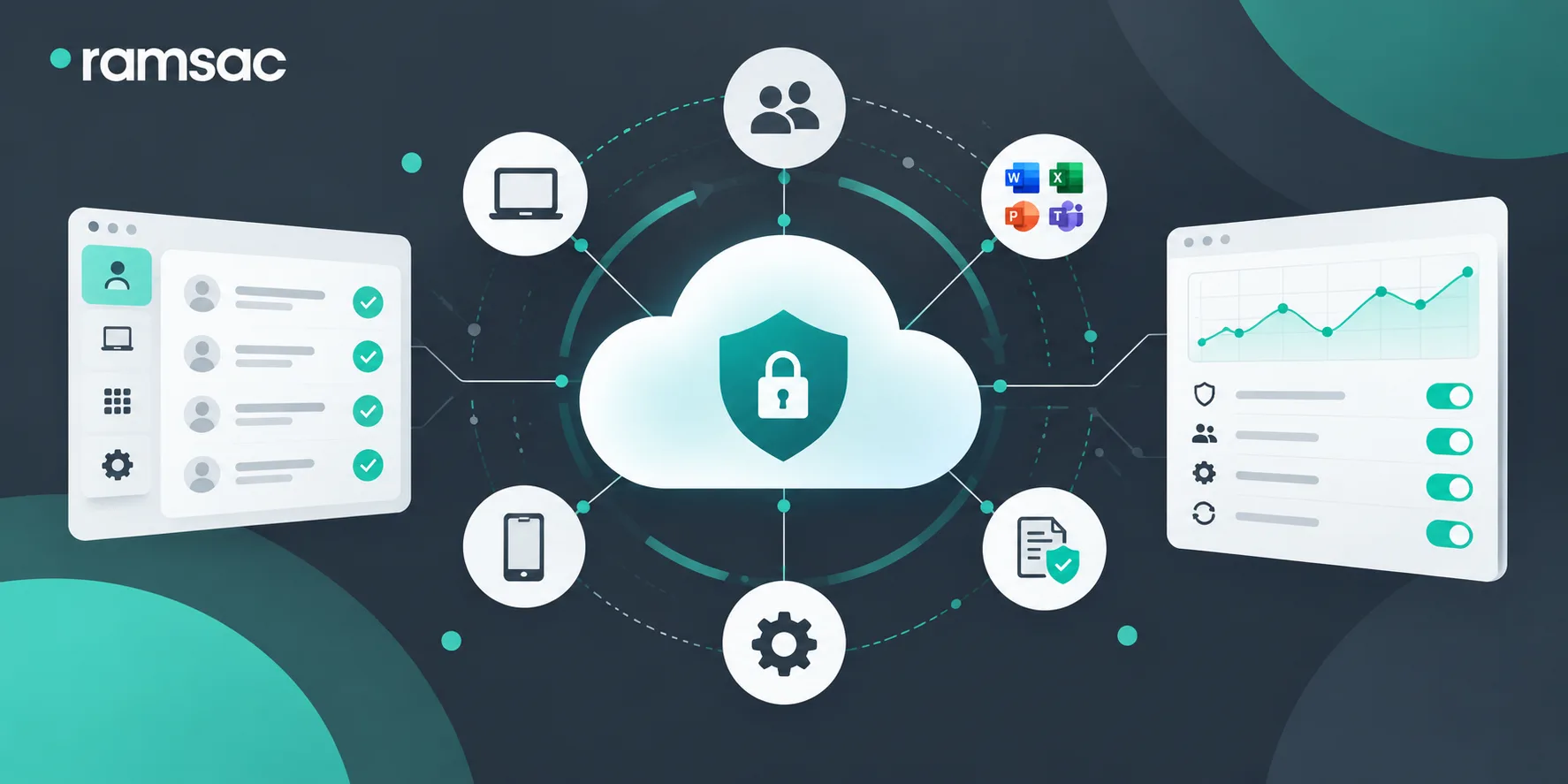
The view from the stage was that trust is a design decision rather than a fixed property of the technology. Where it runs, who can access it, whether it is encrypted, governed and auditable: these are the questions every organisation has already answered for every other system that touches sensitive information.
Govern what matters, do not slow what works, as Rob put it from the stage. Good governance is judgement applied where risk and sensitivity are genuinely high, not a brake applied evenly across everything. Handled that way, the discipline AI forces on a business, asking who has access and where data actually lives, tends to expose gaps that were already there in systems nobody had got around to questioning. That is an argument for best practices for your AI governance framework early, not for waiting.
From interest to a structured approach
If the Summit showed one thing, it is that business leaders are not looking for permission to be excited about AI. They are looking for a practical, secure and responsible way to get on with it. The questions from the floor were about sequencing, governance and proof, which are the questions of people who intend to do something.
We are grateful to everyone who made the day what it was. The room was full, our hosts at Dawn Capital gave us a venue that made the conversation easy, and every speaker was generous with both their expertise and their time.
At ramsac, we help organisations make exactly that move, from interest and experimentation towards something more structured. That combines AI transformation and strategy work to find where AI will genuinely help, implementation and Microsoft expertise including Microsoft Copilot, and the managed cybersecurity and governance that make the result defensible. More than thirty years of running technology for organisations sits behind all of it.
If the Summit has left you wondering where your own organisation should start, our AI readiness assessment is a straightforward first step. It gives you a high-level view of where you stand today and what a sensible first use-case might look like. If you would rather just talk it through, we are always happy to do that too.
See what AI could do for your business
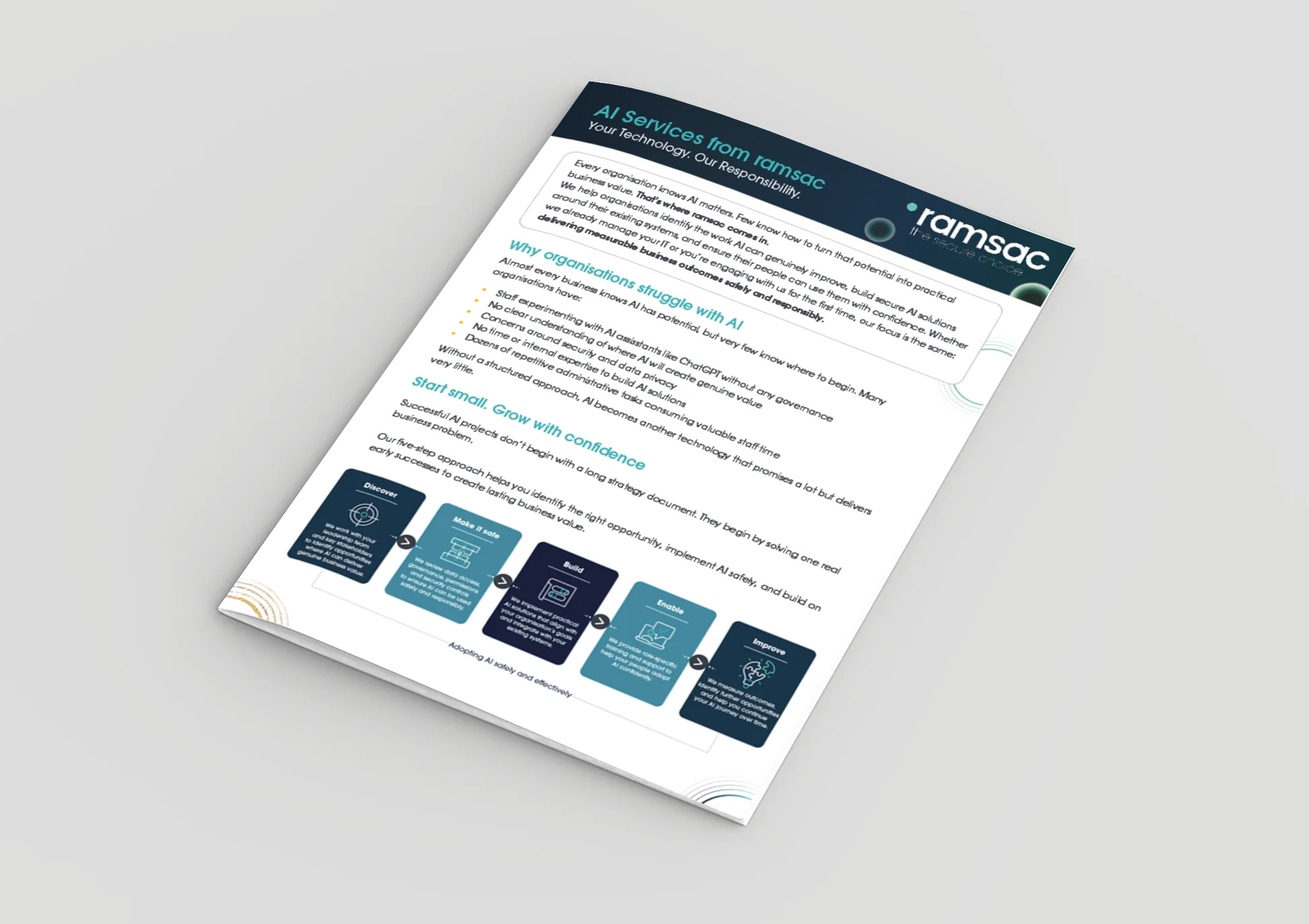
AI delivers the most value when it solves the right problems. ramsac helps organisations identify high-impact opportunities, build secure AI solutions and support confident adoption. Download our factsheet to explore our five-step approach and see practical AI examples across service desk, finance, security, marketing and sales.
Start with one real business problem, and see where AI can take you