





Recently, we responded to a real-world cyber incident that shows exactly how modern attacks happen and why rapid detection makes all the difference.
It started with something completely normal
A user at one of our clients was redirected to what appeared to be a legitimate website. On screen was a standard CAPTCHA prompt, the kind we all see every day when a website asks you to tick a box or select images to prove you’re not a robot. There were no obvious warning signs. No suspicious downloads. No dramatic pop-ups.
But this wasn’t a genuine CAPTCHA.
Instead, it tricked the user into running a small piece of malicious code behind the scenes.
Without them realising, software was downloaded that was designed to give an attacker remote access to the device. The infrastructure it attempted to connect to was linked to a Russian data centre, confirming this was a genuine malicious attempt.
Crucially, the attack operated at user level.
There was:
❌ No ransomware screen
❌ No visible virus alert
❌ No system crash
It looked like completely normal web browsing.
Rapid detection made the difference
Because the device was protected by ramsac secure+, which includes endpoint detection and response (EDR) with active monitoring, our security team was alerted immediately.
Endpoint detection and response (EDR) is also included as part of our totalIT secure service.
Immediate action was taken:
- The affected device was isolated from the internet
- The attacker’s connection was immediately cut off
- Passwords were securely reset from a separate device
- The wider network was protected from lateral movement
The result:
✅ The incident was contained to a single device
✅ There is no evidence of data being accessed or stolen
✅ The attacker was prevented from establishing control
What could have escalated into a full network breach was stopped quickly and calmly.

What could have happened without monitoring
Without active monitoring, this situation could easily have gone unnoticed for days or even weeks.
During that time, an attacker could:
- Explore the network
- Access email accounts
- Extract sensitive information
- Deploy ransomware
- Spread across additional systems
By the time the issue is discovered, the damage is often already done.
Modern cyber attacks rarely announce themselves. They blend into normal behaviour and rely on users being caught off guard.
Why this matters for businesses
Cybersecurity today is not just about prevention. It is about rapid detection and response.
Traditional antivirus tools rely heavily on known signatures. Modern threats often bypass those controls because they exploit user interaction rather than obvious malware downloads.
Endpoint Detection and Response focuses on behaviour. It identifies unusual activity and allows devices to be isolated before attackers can move further.
In this case, that rapid isolation prevented what could have been a serious business disruption.
The takeaway
This was a genuine attack that started with something as simple as a fake CAPTCHA. The user did not knowingly download anything malicious, they were tricked.
Because monitoring was in place, the device was isolated within minutes and the attacker was cut off before any data could be accessed.
Without that visibility and response capability, the outcome could have been very different.
Our secure+ and totalIT secure services are designed to provide exactly this level of protection. combining prevention, monitoring and rapid response to reduce risk and contain threats before they escalate.
If you would like to understand how protected your organisation really is, speak to the ramsac team. We are always happy to review your current security approach and highlight where risks may exist.
Understand your cybersecurity posture
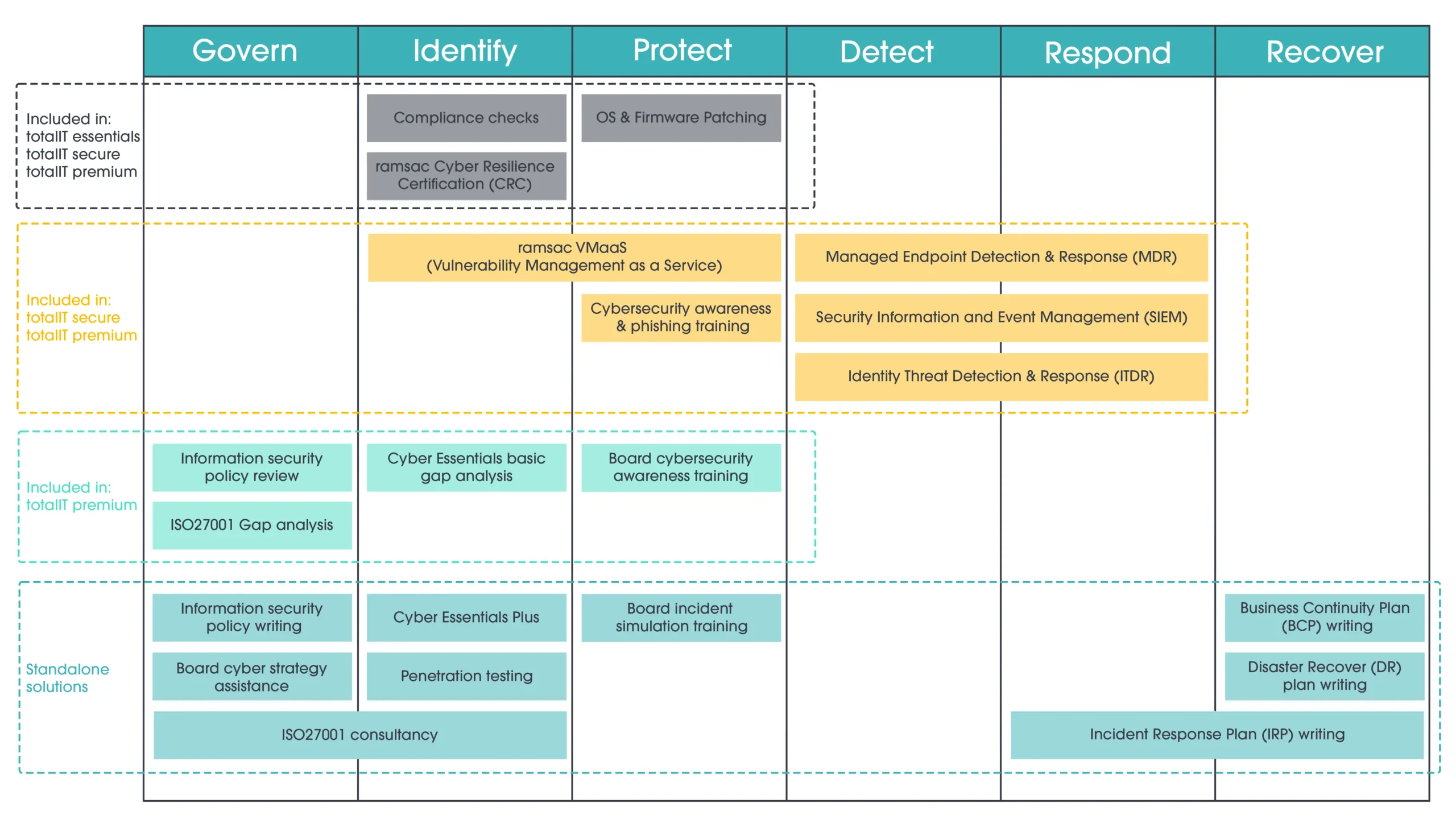
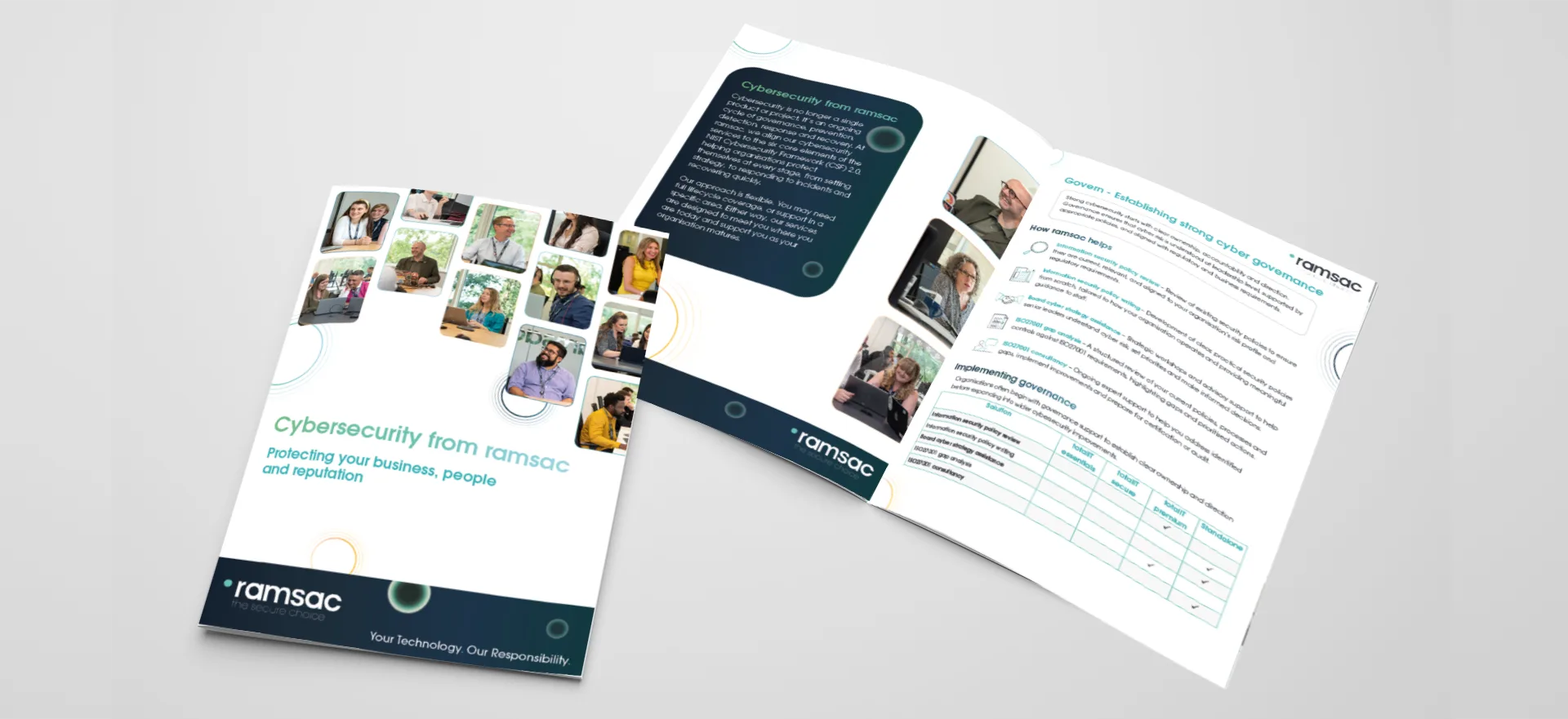
Download our cybersecurity brochure to see how ramsac supports your organisation across the six core elements of cyber resilience: Govern, Identify, Protect, Detect, Respond and Recover. Discover how our services work together to reduce risk, strengthen security and help your business stay resilient.
Frequently asked questions about fake CAPTCHA cyber attacks
Most CAPTCHA prompts are harmless, but there are warning signs to look for:
• Instructions that ask you to copy or paste commands
• Requests to run something on your computer
• Prompts that open new system windows or downloads
• CAPTCHAs appearing on unrelated websites
If anything asks you to run commands or download files, close the page immediately.
A fake CAPTCHA cyber attack is a social engineering technique where a website displays a realistic CAPTCHA prompt but tricks the user into running malicious code instead of simply confirming they are human. This can silently install software that allows attackers to gain remote access to a device.
A legitimate CAPTCHA cannot install malware. However, attackers create fake CAPTCHA pages that instruct users to perform actions that trigger malicious scripts or downloads, allowing attackers to compromise the device.
If a device is compromised, an attacker may attempt to access email accounts, explore the company network, steal sensitive data, or deploy ransomware. Without monitoring, attackers can remain undetected for days or even weeks.
Endpoint Detection and Response (EDR) is a cyber security technology that continuously monitors devices such as laptops and servers for unusual behaviour. It detects suspicious activity and allows security teams to quickly isolate compromised devices before attackers can spread across the network.
In many modern attacks, attackers attempt to move across a network within hours (sometimes minutes) of gaining access to a device. This is why rapid detection and isolation are critical to stopping attacks before they escalate.
secure+ from ramsac provides advanced endpoint detection and response with active monitoring. If suspicious behaviour is detected, security specialists can quickly isolate the device, investigate the activity, and stop attackers before they can access business data.
Yes. ramsac’s secure+ monitoring and endpoint detection capabilities are included as part of the totalIT secure service, providing businesses with continuous protection and rapid response to cyber threats.