
The EU AI act: What UK organisations need to do now

Posted on January 8, 2026 by Louise Howland
AI is moving faster than most organisations can keep up with, and regulators are now racing to close the gap. The EU AI Act, the world’s first comprehensive AI law, is already reshaping how businesses build, buy, and use AI. And even though the UK isn’t in the EU, the Act still affects a huge number of UK organisations.
If your organisation uses AI, buys AI-enabled tools, or serves customers in Europe, this legislation isn’t something happening “over there.” It’s going to shape expectations, contracts, risk assessments and governance frameworks here in the UK too.
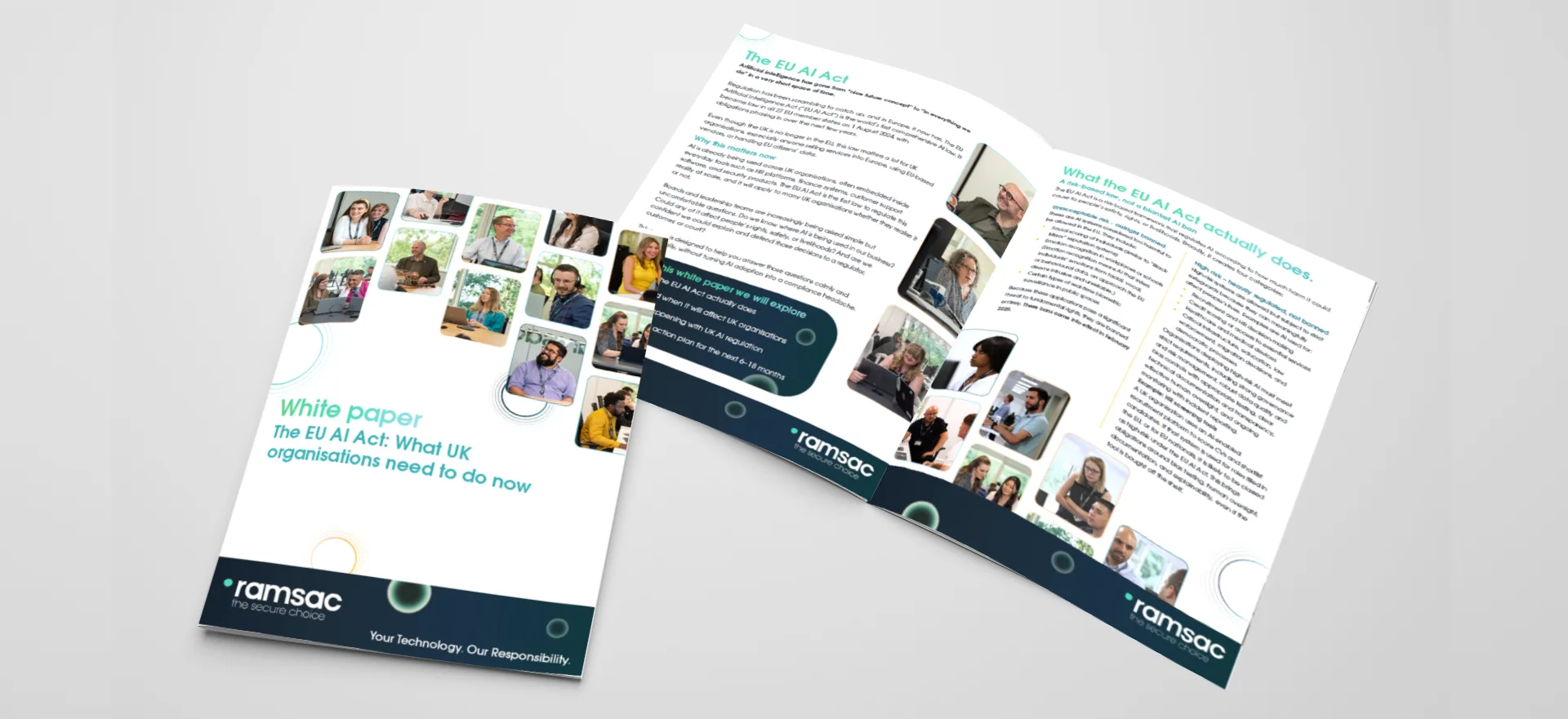
To help cut through the noise, we’ve put together a detailed white paper, The EU AI Act: What UK Organisations Need to Do Now, giving you the practical, no-nonsense roadmap leaders need to get ahead.
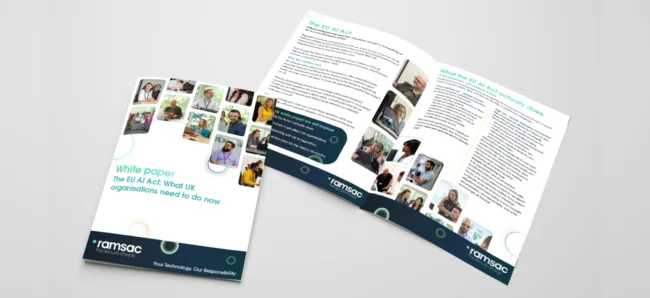
This blog gives you the highlights. The full paper gives you the plan.
📥 Download your copy now and make sure your organisation stays compliant, competitive and confident in its AI use.
Why this matters right now
The EU AI Act introduces:
- Banned AI practices (from Feb 2025)
- Strict rules for high-risk AI systems
- New transparency and governance expectations for anyone using AI
- AI Literacy requirements
- Fines up to €35 million or 7% of global turnover
And yes, the Act applies to non-EU businesses if their AI touches EU users or markets, which of course includes many UK organisations.
But here’s the good news: getting ahead isn’t just about compliance. It’s about building trust, improving data governance, and making sure AI adoption doesn’t outpace your ability to use it safely.

What UK organisations should be doing today
Our white paper breaks this down step-by-step, but here are the essentials:
🔍 Get visibility of AI across your organisation – Most organisations underestimate just how much AI they’re already using. Inventory first, fix later.
⚠️ Understand which AI uses are “high-risk” – Recruitment, credit decisions, biometrics, healthcare, education, safety systems, these are all under the microscope.
📋 Strengthen governance and accountability – AI policy, human oversight, DPIAs, supplier due diligence: these are no longer “nice to haves.”
👥 Train your people – AI literacy is now an expectation. If staff don’t understand the technology, you can’t prove responsible use.
🤝 Review your vendors – Your AI risk is often your supplier’s AI risk. Contracts, documentation, and transparency will matter more than ever.
These steps put you on solid footing for EU AI Act compliance and for whatever the UK brings in next.
Want the full roadmap?
This blog is deliberately short. The real value is in the full white paper, packed with the detail, examples and practical guidance that senior leaders, IT teams, data professionals and governance owners need.
👉 Download the full white paper here: The EU AI Act: What UK Organisations Need to Do Now
The EU AI act: What UK organisations need to do now
Understand how the EU AI Act affects UK organisations, what action to take now, and how to manage AI risk confidently with our practical guidance.
EU AI Act: What Organisations Need to Know
Yes. The Act applies to companies outside the EU if their AI systems are used by EU customers or if AI outputs affect people within the EU. Many UK businesses fall into this category without realising it.
Banned AI practices come into force in early 2025. High-risk AI obligations take effect from 2026, with further requirements phasing in through 2027 and beyond. Now is the time to prepare.
Yes, for organisations deploying or providing AI systems in scope. The Act requires staff to have “sufficient AI literacy,” meaning practical understanding of how AI works, its risks, and when human intervention is required.
Systems used for recruitment, credit checks, access to essential services, healthcare, education, biometrics and safety-critical environments are generally classified as high-risk and face strict compliance requirements.
Not yet, the UK is taking a “pro-innovation, regulator-led” approach. But regulatory expectations are increasing, and the UK may legislate later. Aligning with EU-style governance is a safe strategic bet.
Start with an AI inventory, risk-classify your AI use, strengthen governance, update procurement and contracts, train staff, and build accountability frameworks. Our white paper explains each step in detail.